
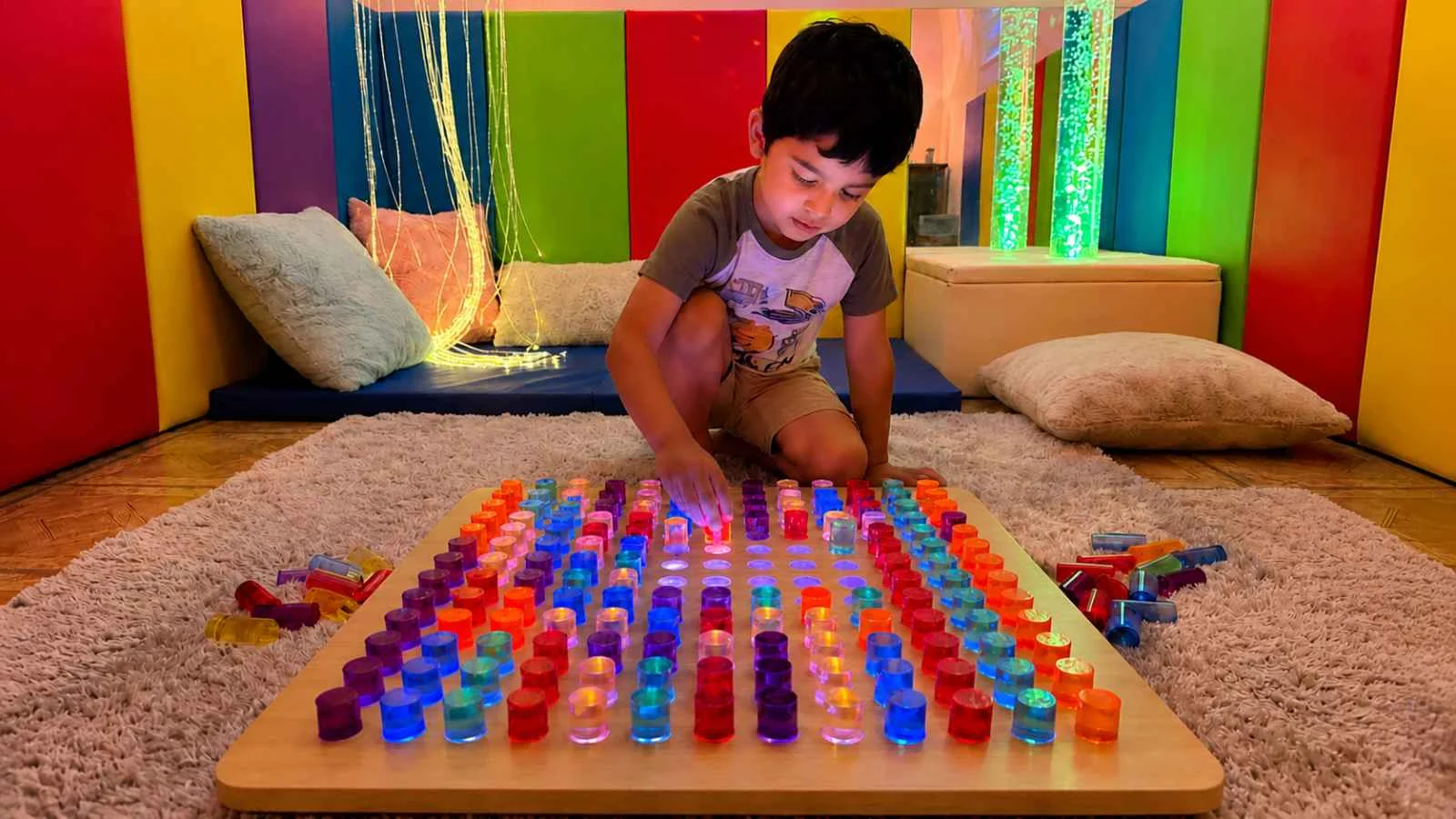
Sensory wall panels, also called sensory wall boards, are large, tactile, light-up boards you mount on a wall to give kids calming visual and touch input in one spot. Press-in glowing pegs, soft color-changing light, a surface a child can build on and stare at. They’re the anchor of most good calm-down corners and sensory rooms, and they double as genuinely cool wall art that a whole family enjoys.
If you’re trying to build a calm corner at home and drowning in options (bubble tubes, fiber optics, projectors, foam shapes), start here. We’ll explain what sensory wall panels actually do, who they help, and then walk through a simple 5-step plan to build a calm corner your child will actually use, not the Pinterest version that looks great and gets ignored. We built ours around one panel and a beanbag, and honestly that was 80% of it.
Table of Contents
What is a sensory wall panel?
A sensory wall panel is a mounted board designed to deliver controlled sensory input. The light-up peg style is the most popular: a backlit grid where you press translucent pegs in to build glowing pictures, then change the color and brightness with a remote. It combines two of the most calming sensory channels, gentle visual input and repetitive fine-motor pressing, on one surface.
Unlike a toy that gets dumped out and lost, a wall panel stays put and stays ready. A child can walk up to it any time they feel wound up, build for a few minutes, and reset. That always-available quality is a big part of why they work so well in a dedicated corner.
What sensory wall panels are good for
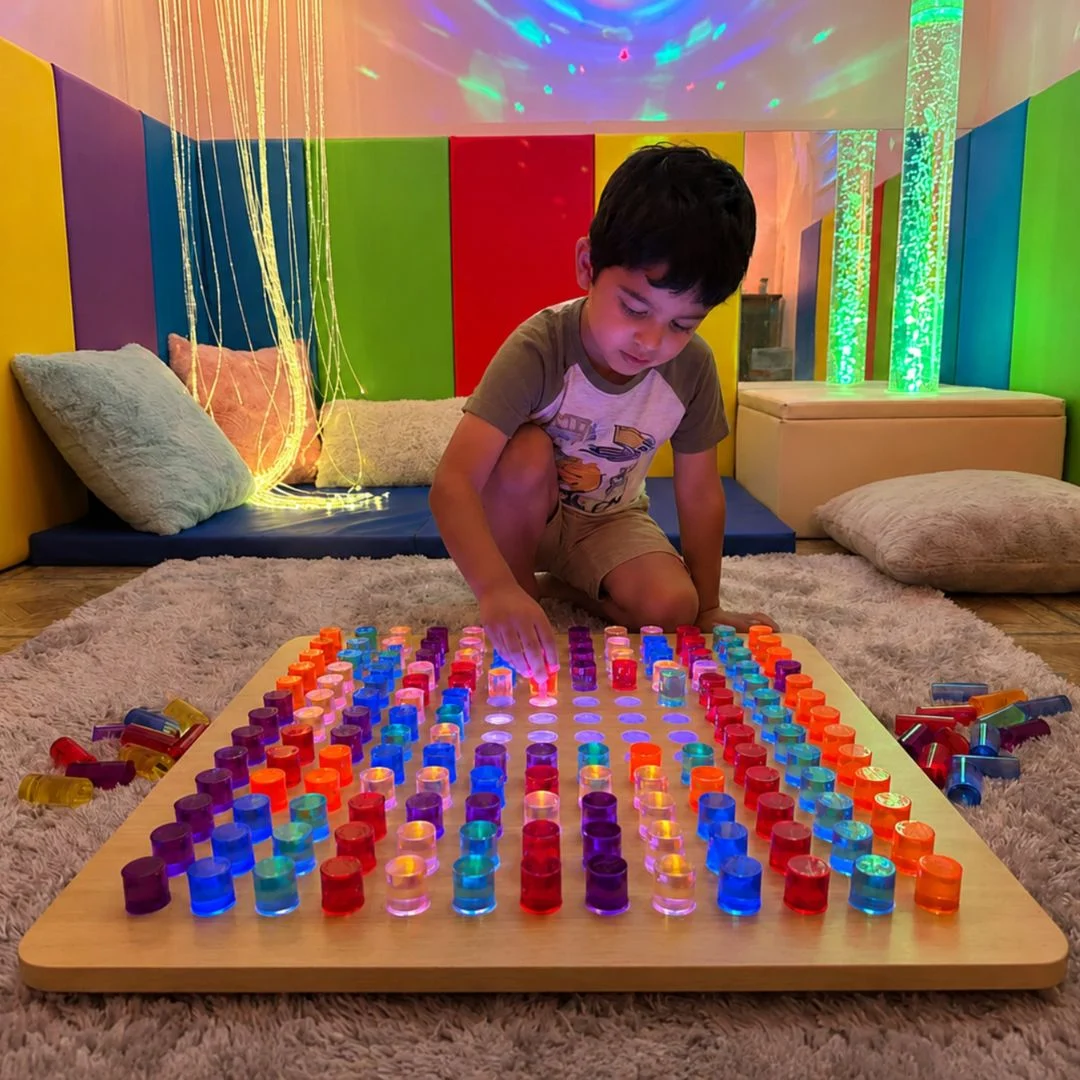
The same panel earns its place for a lot of different families:
- Calming and regulation. Soft, slow-changing light helps many kids settle when they’re overstimulated. It’s a healthier reach than a tablet.
- Focus and fine motor. Pressing pegs into the grid is quiet, repetitive hand work that a lot of kids find grounding.
- Autism-friendly spaces. Sensory rooms and calm-down corners often use light panels because the input is controllable and predictable.
- Classrooms and therapy rooms. Teachers and occupational therapists use them as a reset station.
- Everyone, honestly. Teens use them as room decor, adults use them to decompress. Nobody outgrows glowing wall art.
It’s worth saying plainly: a sensory wall panel is a play and decor product, not a medical device. It supports calm and focus, it doesn’t treat a condition.
Light-up wall art that does more than look good
A lot of people search for light-up wall art wanting something pretty for a bedroom, and land on sensory panels because they do both jobs. Ours changes across 16 colors and several modes, so it works as a night light, a mood light, or an interactive art piece depending on the moment. The difference between a sensory panel and a plain LED sign is interaction: the child builds the picture, which is what turns “nice light” into “calming activity.”
How to build a calm corner in 5 steps
Step 1: Pick the spot
Choose a low-traffic corner away from the TV and the busiest part of the house. A bedroom corner, a nook in a playroom, the end of a hallway. It should feel a little tucked away. The whole point is retreat.
Step 2: Mount the panel at kid height
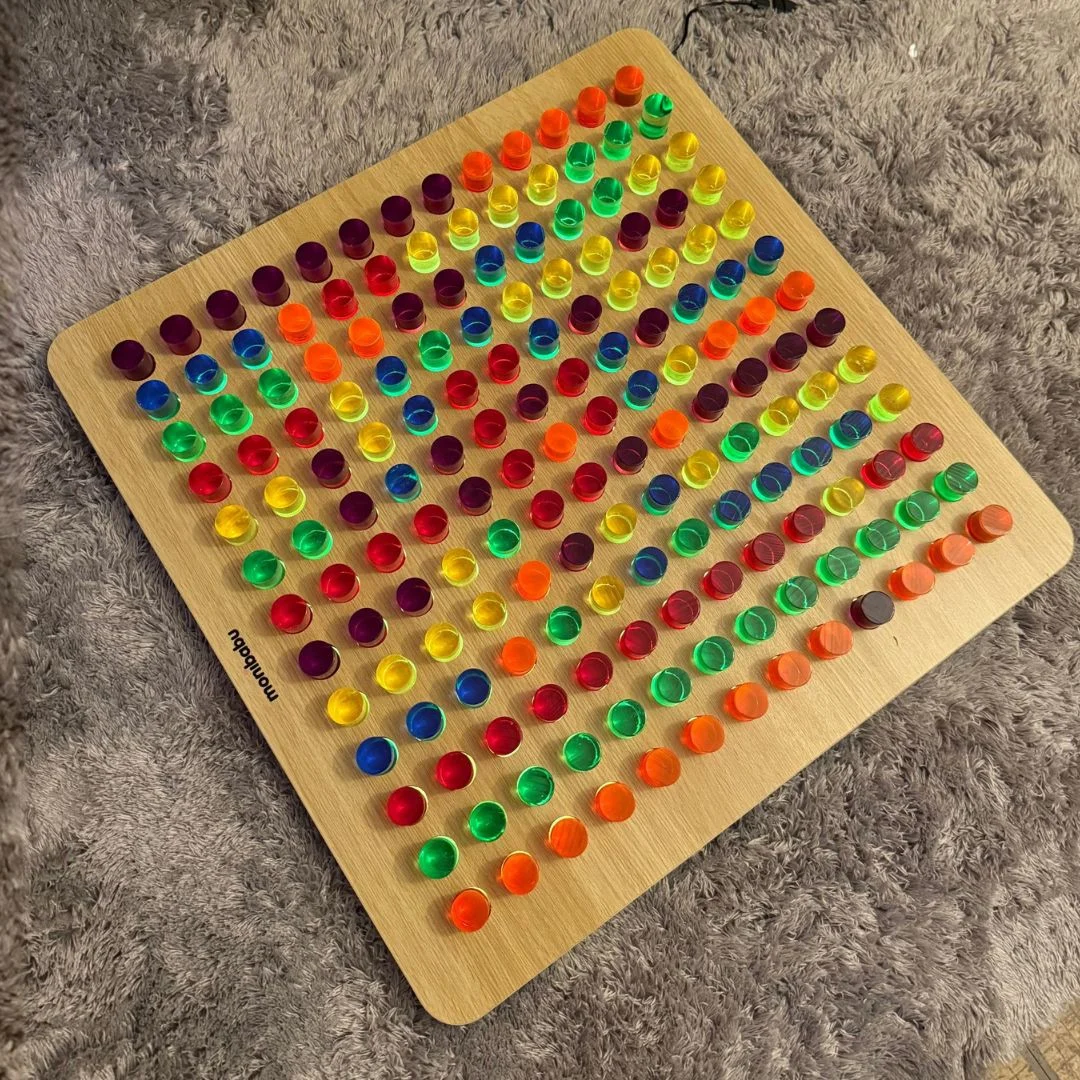
Put the panel low enough that your child can reach every peg. This is a hands-on surface, not a picture to look up at. Most panels hang like framed art in about ten minutes, or sit on a low table or shelf if you’d rather not drill.
Step 3: Add soft seating
A beanbag, floor cushion, or small tent under the panel gives the corner a body. Soft, low, and cozy. This is where the child sits to build and to calm down, so comfort matters more than looks.
Step 4: Keep one or two calm toys nearby
Resist the urge to pile the corner with stuff. One or two quiet, low-stimulation items is plenty: a textured fabric, a fidget, a water book. Too many choices turns a calm corner into a mess corner. If you’re not sure what fits, our guide to what sensory toys are breaks down seeker versus avoider, which decides what belongs here.
Step 5: Dim the surroundings
Lower the overhead light in that corner so the panel’s glow stands out. A softer pool of light makes the space feel separate and soothing. That contrast is what signals “this is the calm-down spot” to a child.
Want the condensed version to print and pin up? Our Calm Corner Setup Checklist covers these same five essentials on one page, plus classroom rules and a script kids can follow.
Which panel size should you get?
MoniBabu makes two, and the right one depends on your space and budget:
- The Light Up Peg Board ($262.99): a 30 by 30 cm tabletop board with a remote and 16 colors. Great for a smaller corner, a desk, or a first try before you commit to a big wall piece. Doubles as a night light.
- The Light Up Sensory Wall Panel ($459): the full 60 by 60 cm, 175-peg statement piece. This is the one that becomes the centerpiece of a sensory room. USB-powered, hangs in about ten minutes, remote for 16 colors and 4 modes. Kids, teens, and adults all use it.
Both ship free in the US with 30-day returns, so you can try the smaller one and step up later. See both in the MoniBabu shop.
Mounting and safety notes
A few practical things before you drill:
- Anchor to the wall properly. Use the included hardware and hit a stud or use wall anchors so a child can press firmly without the panel shifting.
- Mind the cable. Route the USB cable tidily so it isn’t a pull hazard for little ones.
- Small parts. The pegs are small, so panels are rated for ages 3 and up with supervision for younger kids. The AAP toy safety guide is a quick read on this.
Sensory wall panel vs bubble tube vs projector: which to pick
Once you start planning a calm corner, you will run into three popular options, and they are not equal. A bubble tube is beautiful and soothing to watch, but it is passive. The child looks at it, they do not build with it, and it takes up floor space and needs water changes. A star or ocean projector throws light on the ceiling, which is lovely for winding down at bedtime, but again the child just watches, and the effect fades fast once it is familiar. A sensory wall panel is the one that stays interesting because it is interactive. The child presses the pegs, builds a picture, changes the colors, and resets it a hundred different ways. That hands-on element does two things at once: it gives the calming visual input of the light and the grounding fine-motor input of the pressing. For most families building one calm corner on a budget, the panel is the better anchor precisely because a child engages with it instead of just staring. If you have the room and the budget, a projector makes a nice bedtime add-on alongside a panel. But if you are choosing just one centerpiece, pick the thing your child can actually do something with. That is almost always the wall panel.
The bottom line on sensory wall panels
A sensory wall panel is the single best anchor for a calm corner because it does two calming jobs at once and stays interesting for years. Mount it at kid height, add soft seating, dim the surroundings, and keep only one or two quiet toys nearby. Start with the tabletop board if the budget is tight and step up to the big wall panel later. Do that, and you will build a corner your child actually retreats to, which is the whole point.
Sensory wall panels: quick answers
What are sensory wall panels?
Sensory wall panels are mounted, tactile boards that give calming visual and touch input, usually through press-in glowing pegs and color-changing light. They anchor calm-down corners and sensory rooms and also work as interactive light-up wall art for kids, teens, and adults.
Are sensory wall panels good for autism?
Many families, classrooms, and occupational-therapy settings use light-up sensory panels in autism-friendly spaces because the gentle, controllable glow and repetitive peg-pressing can be soothing and focusing. They are a play and decor product, not a medical treatment.
How do you mount a sensory wall panel?
Most panels include hanging hardware and mount like framed wall art in about ten minutes. Hang it at child height so your child can reach the pegs, anchor it securely to a stud or wall anchors, and route the power cable safely. Many can also stand on a table or shelf.
How much does a sensory wall panel cost?
Prices vary by size. A tabletop light-up peg board runs around $260, while a large 175-peg wall panel is about $460. Starting with a smaller board and upgrading later is a common, budget-friendly path. If you are planning the whole corner, our guide on which sensory room equipment to buy first shows where a panel fits.
Do sensory wall panels need batteries?
The light-up peg style is usually USB-powered with an included adapter, so you plug it into a wall charger or power bank rather than replacing batteries. Check the specific product, but MoniBabu panels run on USB.
MoniBabu builds calming, screen-free light-up toys for sensory corners and rooms. Not sure which panel fits your space? Send us a message and a real parent will help you choose.
Moni
MoniBabu founder. Our own calm corner started with exactly this panel and a beanbag, still the first place my kids head after a long day.