
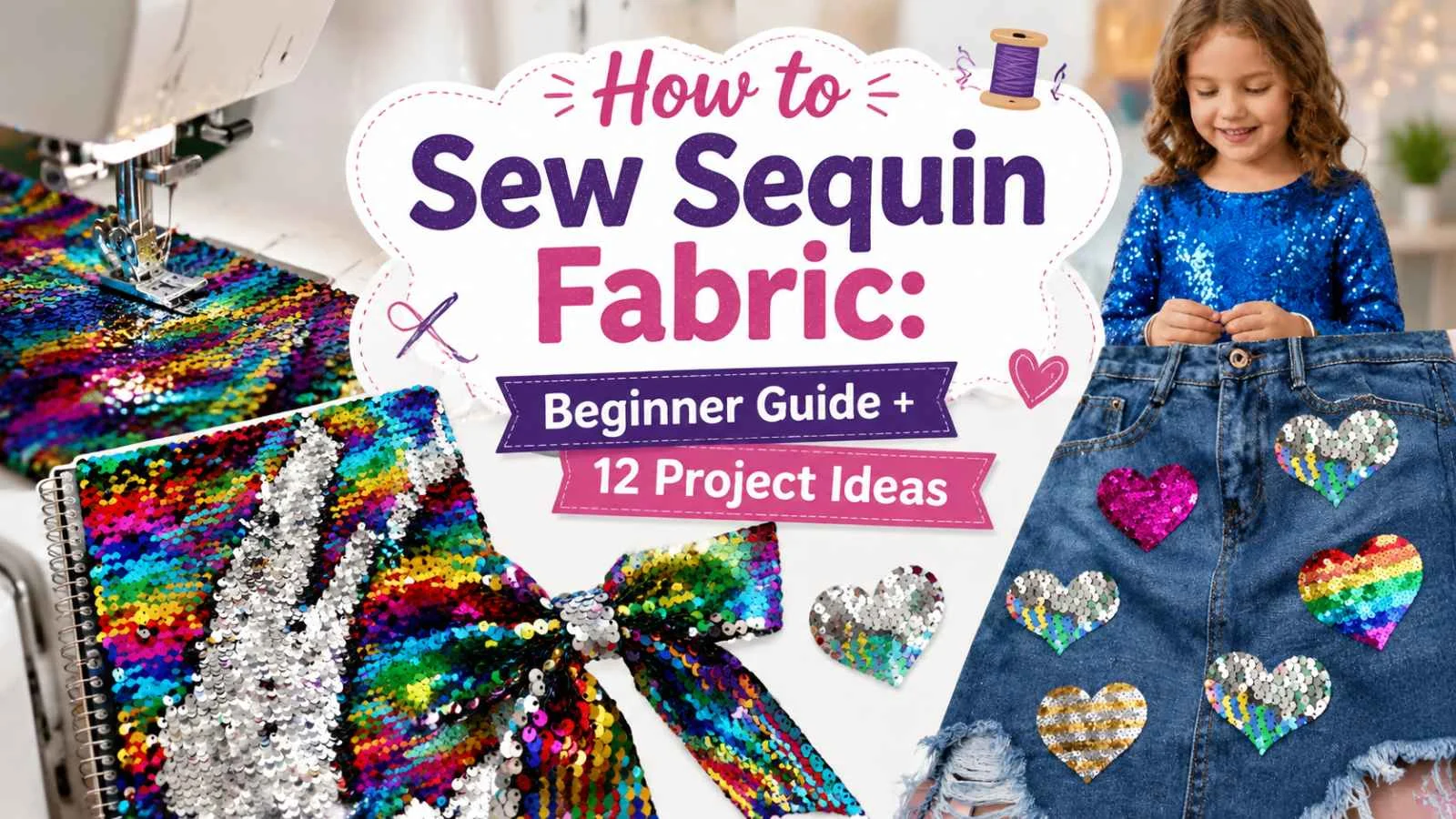
Learning how to sew sequin fabric comes down to three things: use a longer stitch, go slow, and don’t fight the sequins. Sequin fabric looks intimidating because of all those shiny discs, but it sews up more easily than most beginners expect once you know the handful of tricks that stop needles from breaking and seams from puckering. If you can sew a straight line on cotton, you can sew this.
This guide is written for the reversible “flip” sequin fabric parents buy for sensory projects: calming pillows, busy boards, sensory blankets, and the mermaid-style clothes kids love. We’ll cover the tools you need, the step-by-step method, the mistakes that trip people up, and then 12 project ideas to actually use it on. No sewing degree required. We learned this the messy way so you don’t have to.
Table of Contents
What is reversible sequin fabric?

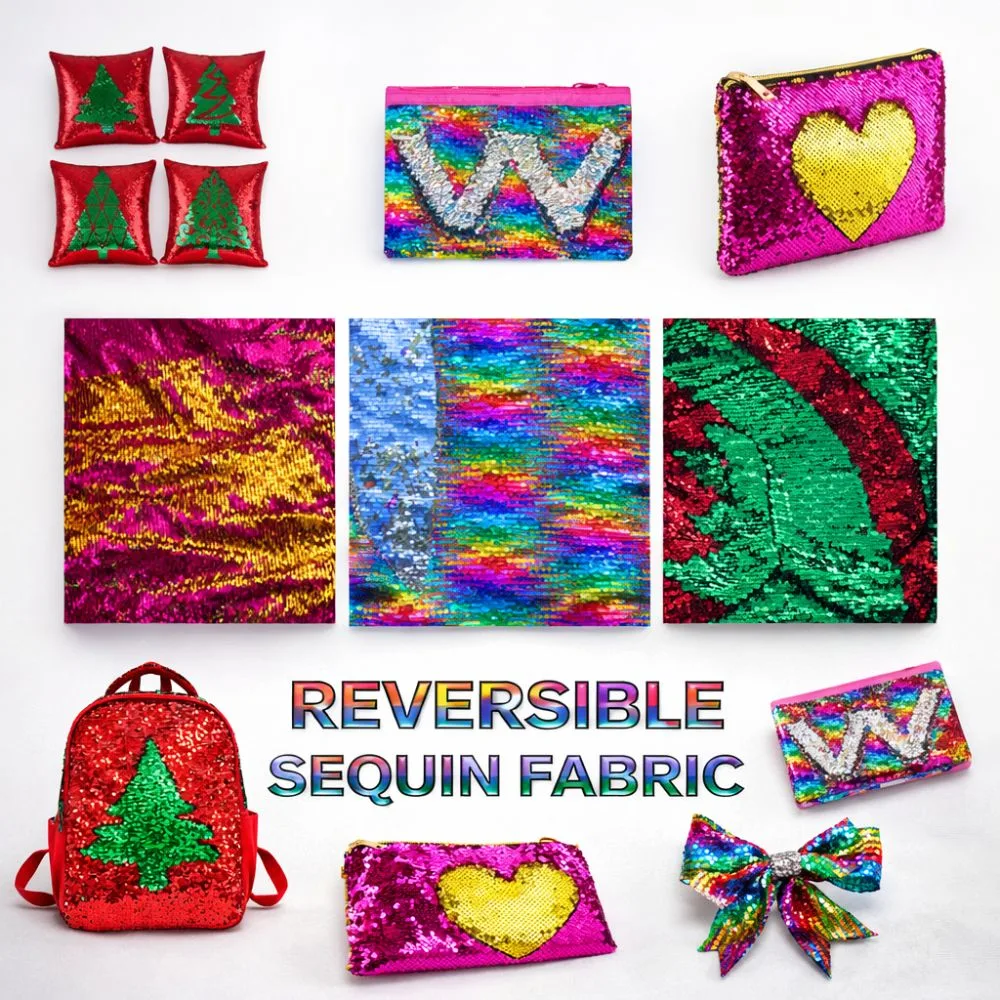
Reversible sequin fabric, also called flip or mermaid sequin fabric, has two-tone sequins sewn onto a soft, slightly stretchy mesh backing. Brush your hand one way and it shows the first color. Sweep it back and it flips to the second. That brush-and-change motion is the whole appeal: it’s satisfying, it’s tactile, and it’s mesmerizing for kids, which is exactly why it works so well for sensory play.
The fabric is usually sold by the yard and cut to order, around 52 inches wide. Because the sequins sit on a knit-style base, it behaves a little like a stretch fabric, so a few small adjustments make sewing it smooth.
What you need to sew sequin fabric
- A sturdy needle. Use a size 90/14 or a denim/jeans needle. Sequins are hard, and a thin needle will snap or skip. Keep a spare on hand.
- Polyester thread. It has a little give, which suits the stretchy backing better than stiff cotton thread.
- A longer stitch length. Set your machine to roughly 3 to 3.5mm. Short stitches over sequins cause skipping and jams.
- Sharp scissors or a rotary cutter. For clean cuts through the sequins and backing.
- Wonder clips instead of pins if you have them. Pins slip on sequins; clips hold the edge firmly.
- Optional: a walking foot. It feeds the stretchy fabric evenly and reduces puckering. Nice to have, not essential.
How to sew sequin fabric, step by step
- Plan your seams first. Sequin fabric has a nap (a direction the sequins lie). Cut all your pieces facing the same way so the color is consistent.
- Remove sequins from the seam allowance. This is the pro move. Along the exact line you’ll stitch, pluck or snip off the sequins so your needle sews through backing only. It saves your needle and gives a flatter seam. Ten minutes here saves a broken needle later.
- Clip, don’t pin. Line up your pieces right sides together and hold the edge with clips.
- Sew slowly with a long stitch. Go steady and let the machine feed the fabric. Don’t yank it. If you hit a stubborn sequin, stop with the needle down, lift the foot, adjust, and continue.
- Press carefully, low heat. Never iron directly on the sequins, they’ll melt. Use a low setting and a pressing cloth, and press only the backing side.
- Finish the edges. A zigzag or overlock stitch keeps the mesh backing from fraying. For no-sew projects, fabric glue or a simple folded edge works too.
Common mistakes (and easy fixes)
- Broken needles? Your needle is too fine or you’re sewing over sequins. Switch to 90/14 and clear the seam line first.
- Skipped stitches? Lengthen the stitch and slow down. Short, fast stitching over discs skips.
- Puckered seams? The backing is stretching as you sew. A walking foot or gentle, un-stretched feeding fixes it.
- Scratchy finished edge? Sequins can have sharp edges. Fold the backing so raw sequin edges face inward, away from skin, especially for anything a child holds.
12 sequin fabric project ideas
Half of these are sensory, half are just fun. All use small amounts of fabric, so a yard goes a long way:
- Calming flip pillow. The classic. A cushion cover kids brush to change color and settle down.
- Sensory busy board panel. Staple or glue a square to a board for a brush-and-flip station.
- DIY sensory wall square. A framed panel for a calm corner.
- Fidget strip. A small stitched strip for pockets or backpacks.
- Mermaid tail blanket accent. A shiny panel on a cozy blanket.
- Costume and dress-up panels. Mermaid tops, superhero details, dance costumes.
- Reversible tote or drawstring bag. Brush to redecorate on the go.
- Book or tablet sleeve. A padded, flippable cover.
- Holiday stockings. The red-green colorway is made for this.
- Bows and hair clips. Tiny scraps, big sparkle.
- Chair or bench cushion. A brush-and-reset seat for a reading nook.
- Weighted lap pad cover. Pair the tactile top with a weighted insert for calming input.
For the sensory projects especially, the brush-to-change motion does the heavy lifting. If you want the background on why that kind of tactile input helps kids regulate, our guide to what sensory toys are explains the seeker-versus-avoider idea.
Which fabric to buy
Our Reversible Sequin Fabric is sold by the yard and cut to order, about 52 inches wide, in three flip colorways (magenta/gold, silver/rainbow, red/green) plus a 3-color bundle. A half yard from $24.99 is enough for pillows, bows, and busy-board panels, and it’s soft, sew-friendly, and backed for exactly these projects. Hand wash cold and lay flat to dry, no tumble drying and no ironing directly on the sequins. It ships free in the US with 30-day returns. See the colorways in the MoniBabu shop.
How to care for sequin fabric projects
Sequin fabric lasts for years if you treat it right, and ruins fast if you toss it in a hot wash. A few habits keep your projects looking sharp. Always hand wash cold. The sequins are attached to a mesh backing, and a hot machine cycle can loosen them or curl their edges. Swish gently in cool water with a little mild soap, rinse, and press the water out without wringing. Lay the piece flat to dry, sequin side up, and keep it out of direct sun and off the radiator. Never tumble dry. Heat is the enemy of sequins, full stop. The same rule applies to ironing: if a piece needs smoothing, press only the backing on a low setting with a cloth in between, and never touch the iron to the sequins themselves. For storage, keep finished pieces flat or loosely rolled rather than crammed into a tight drawer, so the sequins do not get bent. If you are making something for a young child, double check that every edge is folded so no sharp sequin rim sits against skin, and give the piece a quick tug-test to be sure nothing sheds. Not into sewing at all? You still have options. Fabric glue, iron-on backing on the mesh side, or simply stapling a panel to a board all work for busy boards and wall squares. You do not need a machine to enjoy the brush-and-flip effect.
The bottom line on sewing sequin fabric
Sewing sequin fabric is far easier than it looks once you use a sturdy 90/14 needle, a longer stitch, and clear the sequins off your seam line first. Go slow, clip instead of pin, and never iron the sequins. Start with a simple pillow cover, and you will have a brush-and-flip sensory project done in an afternoon. From there, the twelve ideas above will keep a single yard busy for weeks.
How to sew sequin fabric: quick answers
How do you sew sequin fabric without breaking needles?
Use a sturdy 90/14 or denim needle, and remove the sequins along the seam line before you stitch so the needle passes through the backing only. Sew slowly with a longer stitch length of about 3 to 3.5mm. That combination stops nearly all broken needles.
What needle and thread should I use for sequin fabric?
Use a size 90/14 or jeans/denim needle and polyester thread. The heavier needle handles the hard sequins, and polyester thread has enough give for the stretchy mesh backing. Keep a spare needle nearby just in case.
Can you iron sequin fabric?
Not directly. Sequins can melt or warp under a hot iron. Press only the backing side on a low setting with a pressing cloth between the iron and the fabric, and avoid the sequins entirely.
Can a beginner sew sequin fabric?
Yes. If you can sew a straight seam on cotton, you can sew sequin fabric. The main adjustments are a stronger needle, a longer stitch, clearing the seam allowance of sequins, and going slowly. Start with a small project like a pillow cover.
How much sequin fabric do I need for a pillow?
A half yard is usually plenty for a standard cushion cover, with scraps left over for bows or a fidget strip. Sequin fabric is about 52 inches wide, so a little goes a long way on small projects.
MoniBabu sells sew-friendly reversible sequin fabric for sensory and craft projects. Not sure how much to order for your project? Message us and a real person will help.