
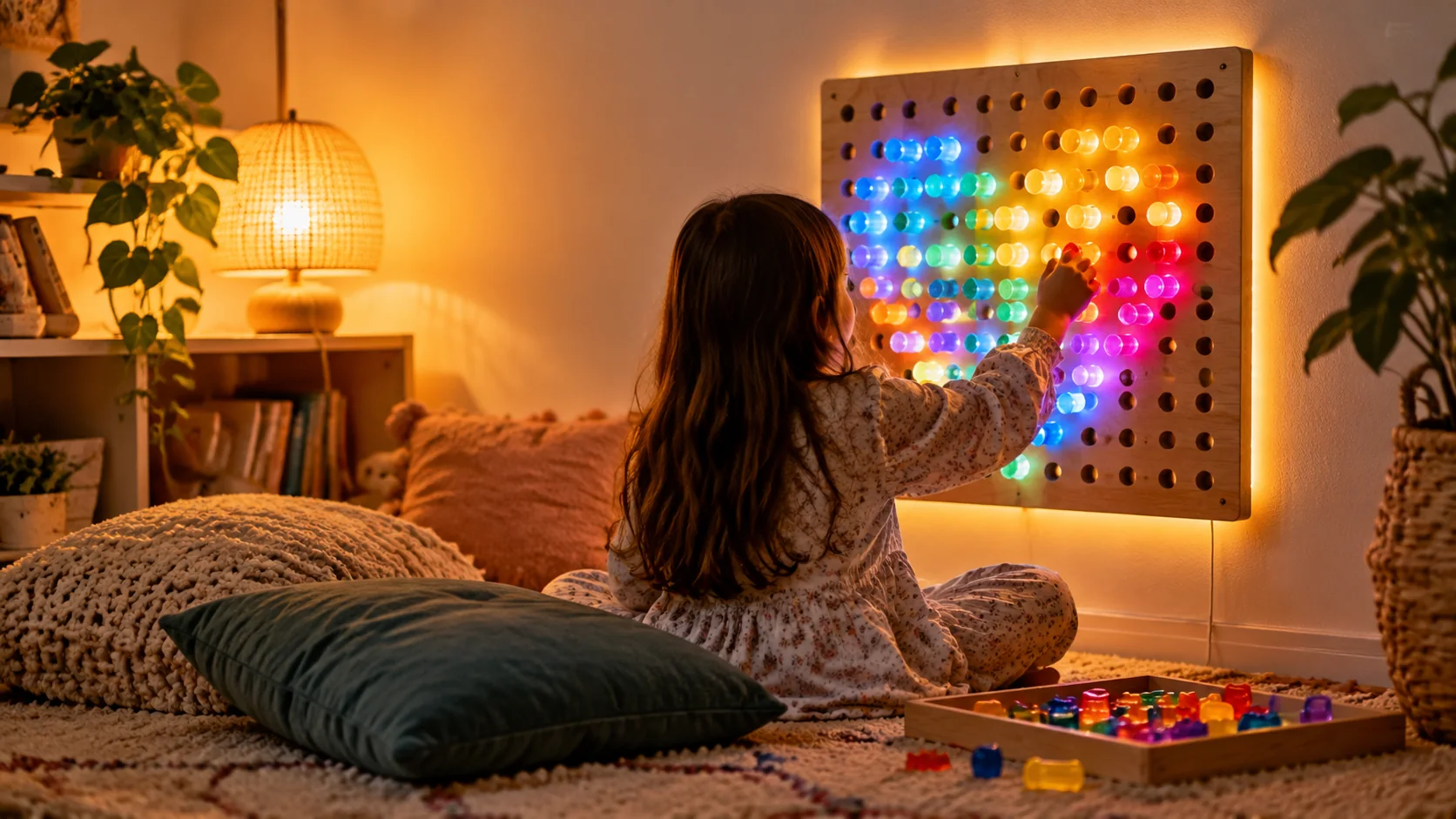
Sensory room equipment works best when you buy it in layers: soft light first, a place to land second, something for pressure or movement third, and the big showpieces last.
In this guide
That order matters more than any shopping list. Most guides we found are written for schools and clinics with budgets that start in the thousands. This one is for a parent, teacher, or therapist with a corner, a closet, or a spare room and a few hundred dollars. We quote prices only for MoniBabu products, because brand prices elsewhere change too fast to print honestly.
What counts as sensory room equipment
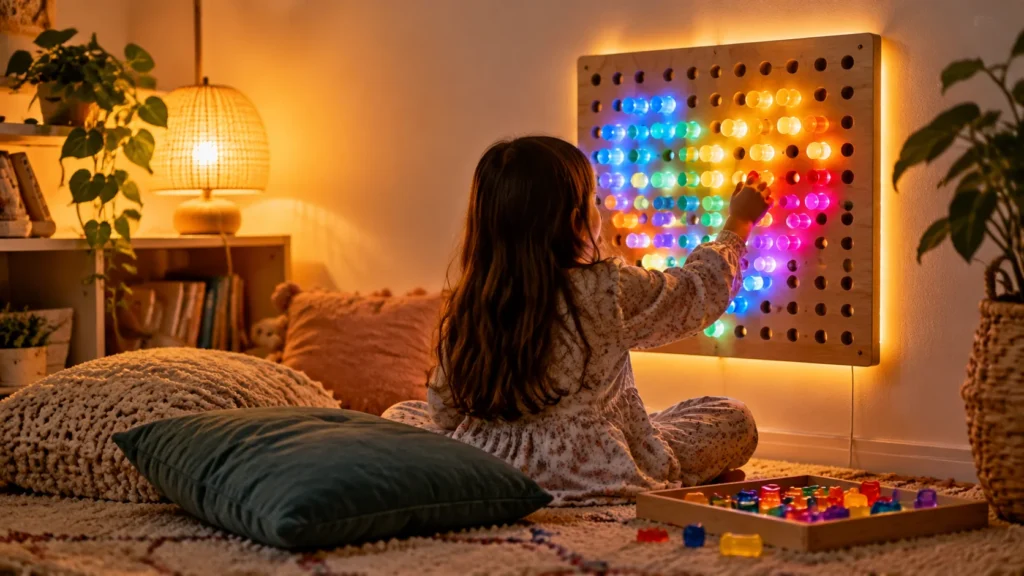
Occupational therapists usually sort sensory tools by sense: sight, touch, sound, movement, and deep pressure. A room that covers each group with at least one item beats a room with ten items from a single group. The OT Toolbox makes the same point in its sensory room equipment guide: pick at least one piece for each sense, favor items that serve several needs, and choose durable pieces because kids are rough on equipment.
Why bother at all? Children with sensory processing differences can react strongly to bright lights, sudden noise, or certain textures. The Cleveland Clinic notes that therapists often recommend everyday tools such as headphones, fidget toys, and scheduled movement breaks alongside occupational therapy. A sensory room is that idea given a corner of its own.
One honest caveat. Research on sensory rooms is still thin, and the studies we could find are small with mixed results. We treat a sensory room as a calming tool that sits next to therapy, never instead of it. If your child has an OT, show them your plan before you spend a dollar.
Start with the goal, not the catalog
Three questions save more money than any coupon:
- Calm down, wake up, or heavy work? A room for melting down needs dim light and soft surfaces. A room for waking up needs movement.
- One child or a whole class? Shared rooms need tougher gear and clearer rules.
- Who supervises? Anything with a swing, a heavy mat, or small parts needs an adult nearby.
If the answer to the first question is “calm down,” most of what you need is light, softness, and quiet. That is why this list starts cheap.
9 sensory room equipment buys, in order
1. Soft, dimmable lighting
A warm lamp or a dimmable bulb is the cheapest upgrade with the biggest effect. Harsh overhead light is the first thing most kids want gone. Get this right before you buy anything that glows.
2. A soft place to land
Floor cushions, a beanbag, or a thick quilt. The goal is a spot a child can retreat to without asking permission. We would spend here before spending on anything electric.
3. Noise-reducing headphones
Not glamorous, but earmuff-style headphones are probably the most used tool in any sensory space. They also travel, which a ceiling swing never will.
4. A quiet, hands-on activity ($15.99 to $29.99)
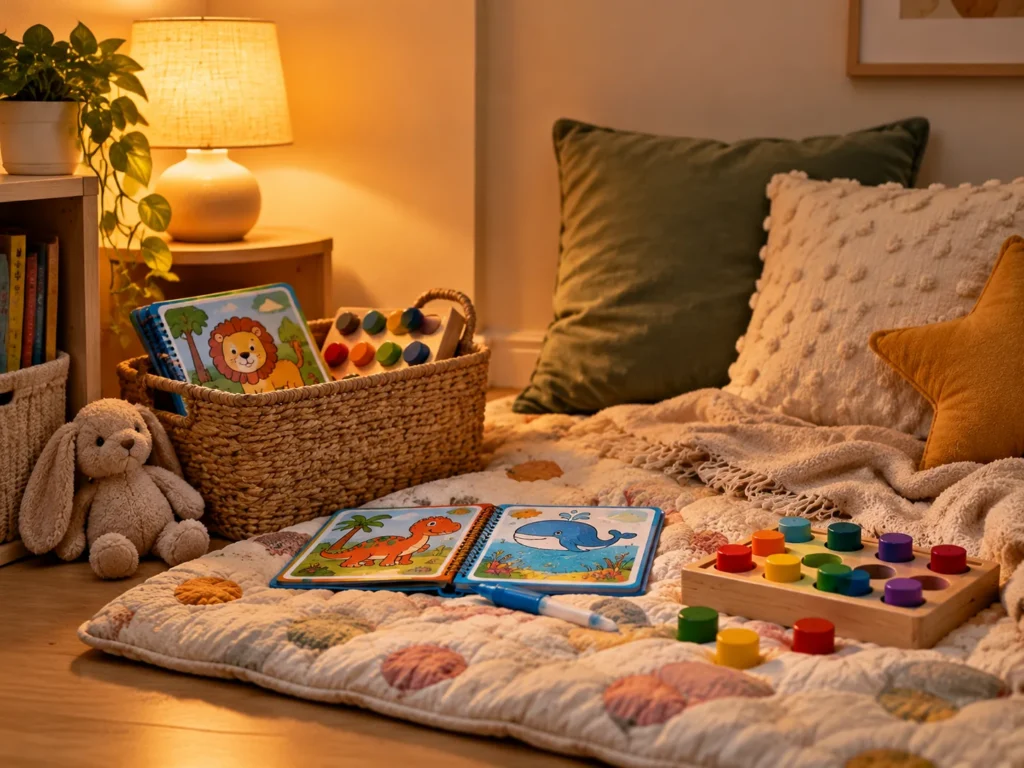
Honestly, these two are not “equipment” in the clinical sense. In a calm corner, though, hands need something to do. Our mess free water coloring book set ($15.99) comes with two reusable books, 16 scenes in total, and two water pens, so there is no ink to spill. The Montessori color sorting toy ($29.99) has 49 wooden pegs and a drawstring pouch for the quiet-time bag.
5. Something for deep pressure
Crash pads, weighted lap pads, and body socks live here. We do not sell these, so we will not rank brands. Ask your OT before using anything weighted, because the right weight depends on the child.
6. Something for movement
A therapy ball or ball chair is the easy start. Swings and trampolines are great if you have the ceiling or floor space and an adult nearby. We do not sell these either, and a room is better with one good movement piece than three crowded ones.
7. A light-up peg board ($262.99)
Our 70-peg light up peg board is a 30 x 30 cm wooden board with a backlit grid, 16 colors, and a remote. Kids press translucent pegs into the grid to build glowing pictures, and it doubles as a night light. It sits on a table or shelf, which makes it the right size for one child at home. You can browse every board in the LED peg boards category.
8. The 175-peg sensory wall panel ($459)
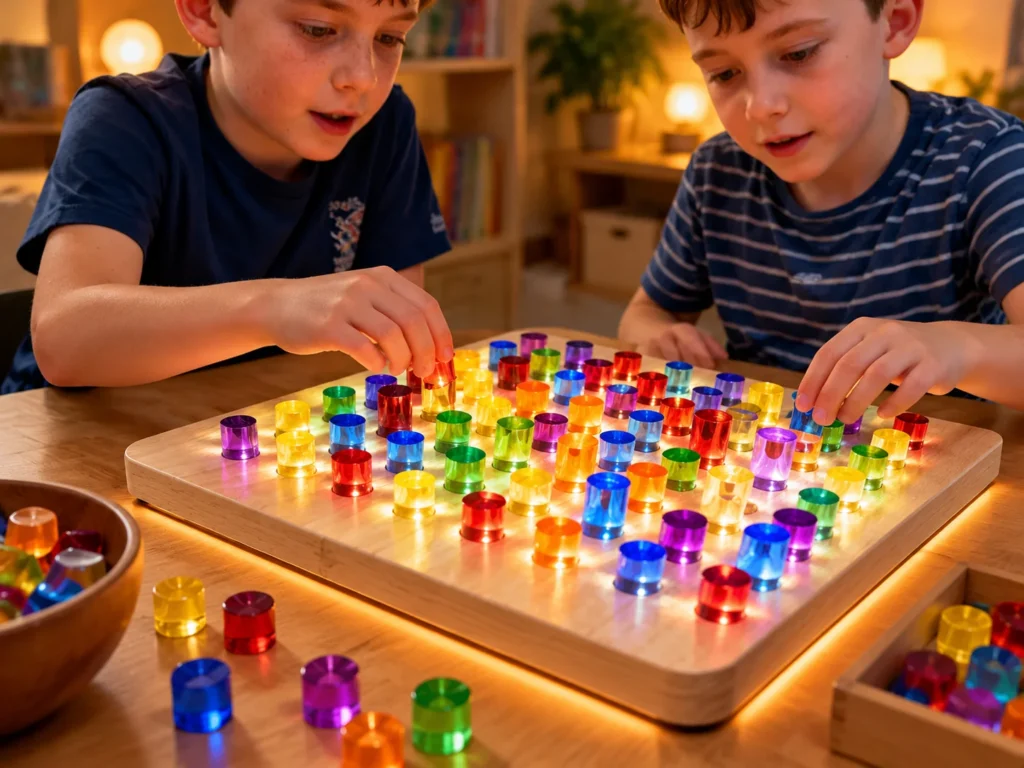
This is the biggest piece we make, and the one we would only recommend after the items above. The 175-peg RGB LED sensory wall panel is 60 x 60 cm, USB powered, and comes with a remote. It hangs on a wall or stands on a table, and its regular price is $689. It earns its spot in a shared space such as a classroom, clinic, or family room, where several kids can build on it at once. For a single child at home, the smaller board in step 7 is usually enough.
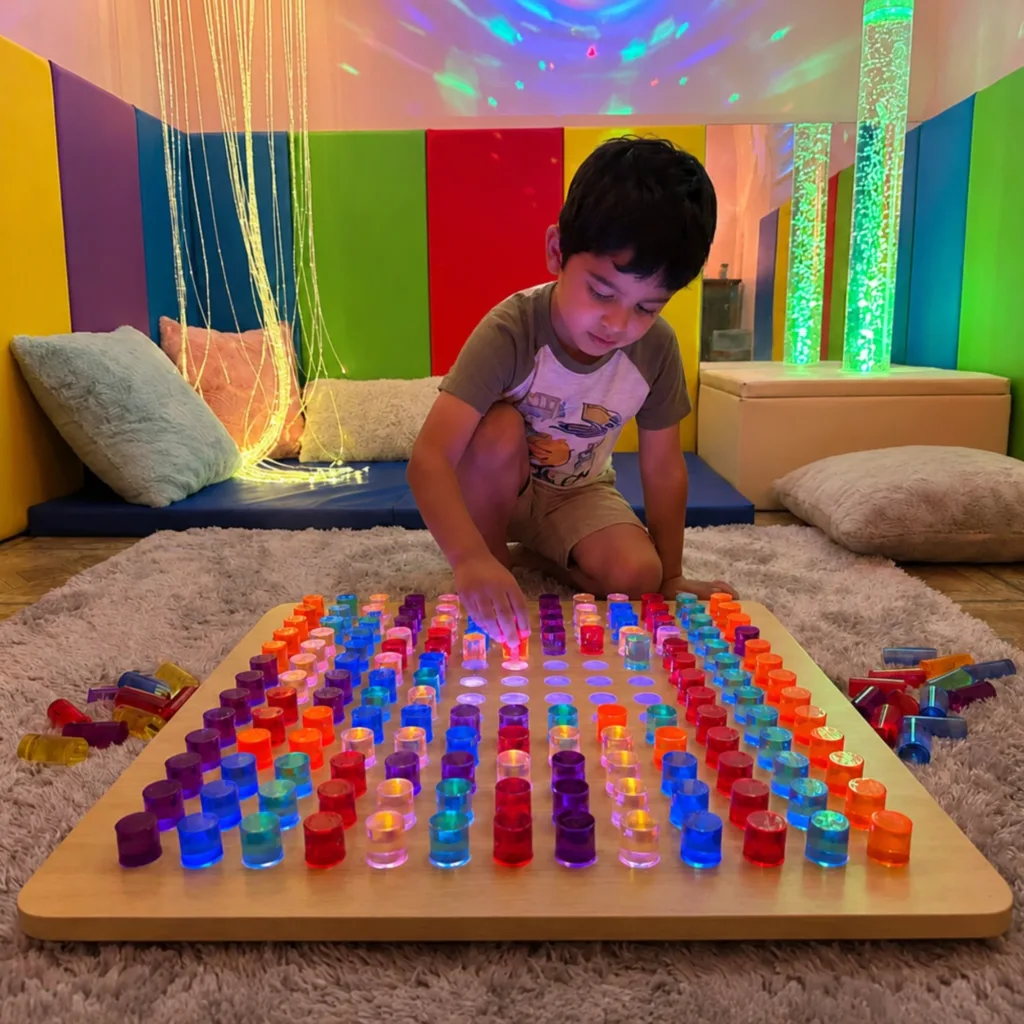
If you are weighing it, our sensory wall panels guide walks through a five-step calm corner build around it.
9. Bubble tubes, ball pits, and big installations (later)
These are the pieces that fill the top of most search results, and they cost the most. We would wait. Buy them only after you have watched which of the first eight actually get used. A bubble tube nobody touches is a very expensive night light.
A first-weekend setup that costs almost nothing
You do not need to buy all nine this month. Here is the order we would use on a Saturday: pick the quietest corner in the house, swap the overhead bulb for a warm one, lay down cushions or a quilt, and put one quiet activity in a basket within reach. Then stop. Watch for a week. Does your child go to the corner on their own? Which item do they pick up first? That one answer tells you whether the next purchase should be pressure, movement, or light.
Our opinion, plainly: a cheap corner that gets used every day beats an expensive plan that sits half-finished. Full “proper” sensory room quotes can look absurd next to what a child actually reaches for.
Budget tiers at a glance
| Tier | What to buy | MoniBabu price points |
|---|---|---|
| Starter | Items 1 to 4: lighting, soft landing, headphones, a quiet activity | $15.99 and $29.99 |
| Build-out | Items 5 to 7: pressure, movement, a tabletop light board | $262.99 for the peg board |
| Showpiece | Item 8: a wall panel for a shared space | $459 |
Want to price your own plan? Our free sensory room budget planner lets you add the prices you find, sort each piece into Now, Next, or Later, and print the result.
Equipping a classroom or therapy room
Shared rooms change the math. The OT Toolbox advises buying for the most students rather than one child’s needs, favoring multipurpose pieces, and checking your school’s rules first, since homemade equipment and some vendors may not be allowed. If money or space is tight, it suggests a portable sensory kit instead of a full room.
School-based OT blog Simply Special Ed shows how far cheap tools go: oil timers, fiber optic lamps, sensory bins, pop tubes, body socks, and beanbag chairs. One practical warning from that post: skip water beads in bins for any student who mouths objects. For classroom fidgets that teachers will actually approve, see our guide to fidget toys for ADHD in the classroom.
Mistakes we would avoid
- Too many lights at once. Two light sources compete. One calm, controllable light beats a disco.
- Buying for the photo. A room that looks great and gets used twice is a closet with extra steps.
- No rules. Decide how long, how many kids, and who helps before the first use.
- Skipping the OT. Weighted and pressure items in particular should match the child.
Sensory room equipment FAQ
What equipment do I need for a sensory room at home?
Start with soft, dimmable lighting, a comfortable place to land, and noise-reducing headphones. Add one tool for deep pressure, one for movement, and one light-up piece such as a peg board only after you see what your child reaches for.
How much does a sensory room cost?
It depends on how many layers you add. Institutional rooms run into the thousands, but a home corner can start far lower. Our own range runs from $15.99 for a water coloring set to $459 for the 175-peg wall panel, and lighting, cushions, and headphones vary by brand.
What should I buy first?
Soft lighting and a place to land. They cost the least, apply to nearly every child, and make everything you add later work better.
Do sensory rooms actually work?
Many families and therapists find them calming, but the research is limited and mixed. Treat a sensory room as one support alongside therapy and routines, not a treatment on its own.
Can I build a sensory room in a small space?
Yes. A corner with a cushion, a dimmable lamp, and a wall-mounted light panel is enough. Our calm corner checklist lists eight things to include, and our sensory room ideas post shows seven real setups from a $46 corner up to a $459 wall panel.
New to the vocabulary? Our explainer on what sensory toys are covers the six main types in plain language.