
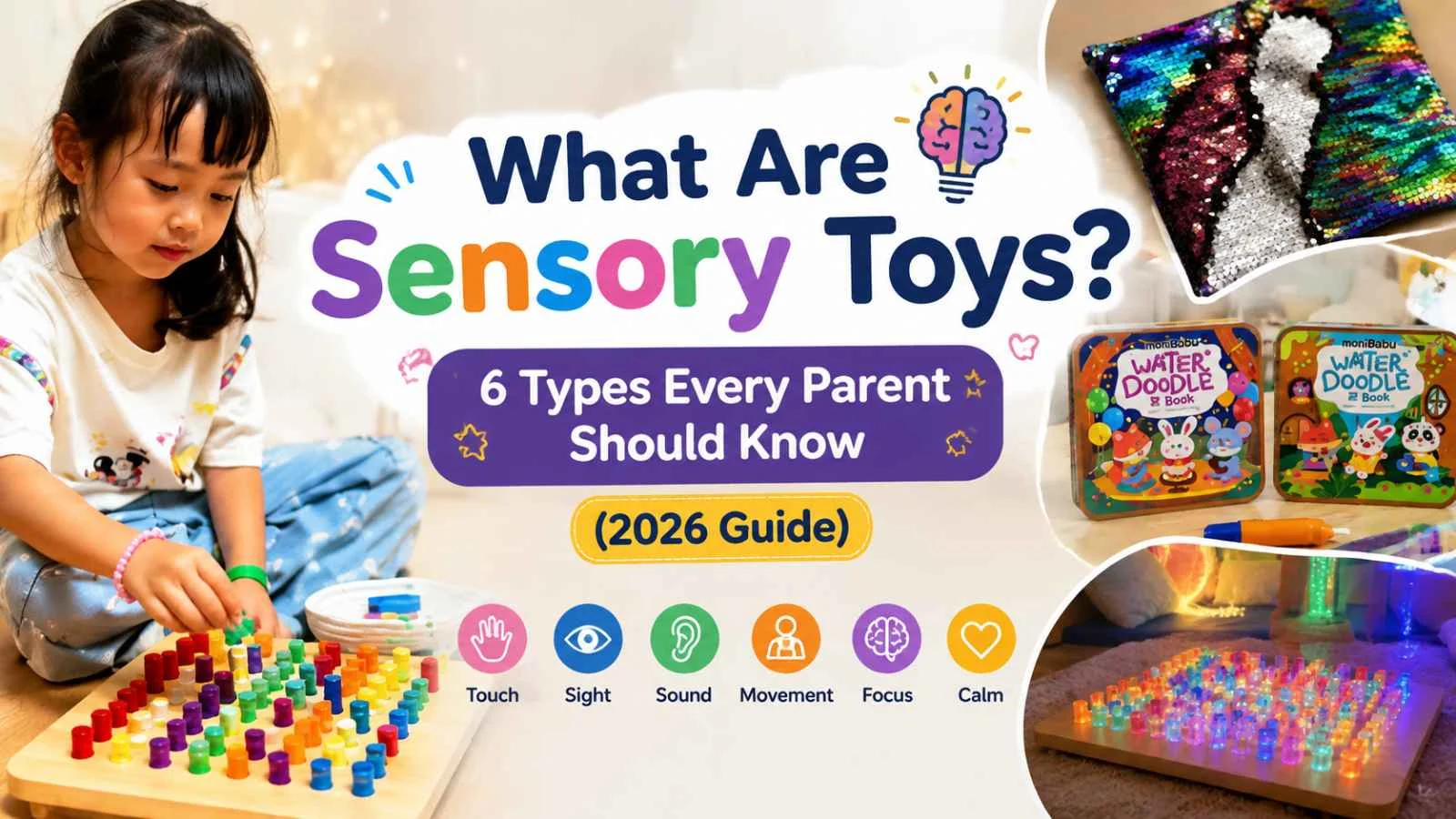
What are sensory toys? In plain English: they’re toys built to feed a child’s senses. Light, texture, pressure, movement. A sensory toy gives your kid something to see, touch, push, or squeeze that helps them settle down, tune in, and play longer. Parents of kids with autism or ADHD hear about them constantly, but honestly, they work for almost every child.
I’ll be straight with you. When I first started researching sensory toys for my own kids, the options felt overwhelming. Weighted this, textured that, boards with lights, boards without lights. Half the product pages read like a therapy textbook. So this guide does what I wish someone had done for me: it explains the types in normal words, tells you which kind fits which kid, and shows you exactly where to start without wasting money.
Table of Contents
What are sensory toys, exactly?
A sensory toy is any toy designed on purpose to stimulate one or more senses: sight, touch, sound, movement, or body awareness. That’s the whole definition. What separates a true sensory toy from a random noisy gadget is feedback. Good sensory toys respond to the child every single time. Press a peg, it glows. Brush the fabric, it changes color. Pour water on the page, a picture appears.
That predictable loop is the magic. Kids repeat it, and the repetition is what calms the nervous system and builds focus. Occupational therapists use this principle daily, and the American Occupational Therapy Association has plenty of reading on how sensory input supports regulation and learning.
Therapists usually sort sensory input into a few channels:
- Visual: lights, colors, contrast, gentle movement
- Tactile: textures, squish, resistance, temperature
- Proprioceptive: pushing, pressing, carrying, building (the “body feedback” sense)
- Fine motor: pinching, sorting, threading, placing small pieces
Most good toys hit two channels at once. A light-up peg board, for example, is visual plus fine motor. That combination is why some toys hold a child’s attention for 40 minutes while others get dropped in 4.
The 6 main types of sensory toys (and who each one fits)
1. Light-up and visual sensory toys
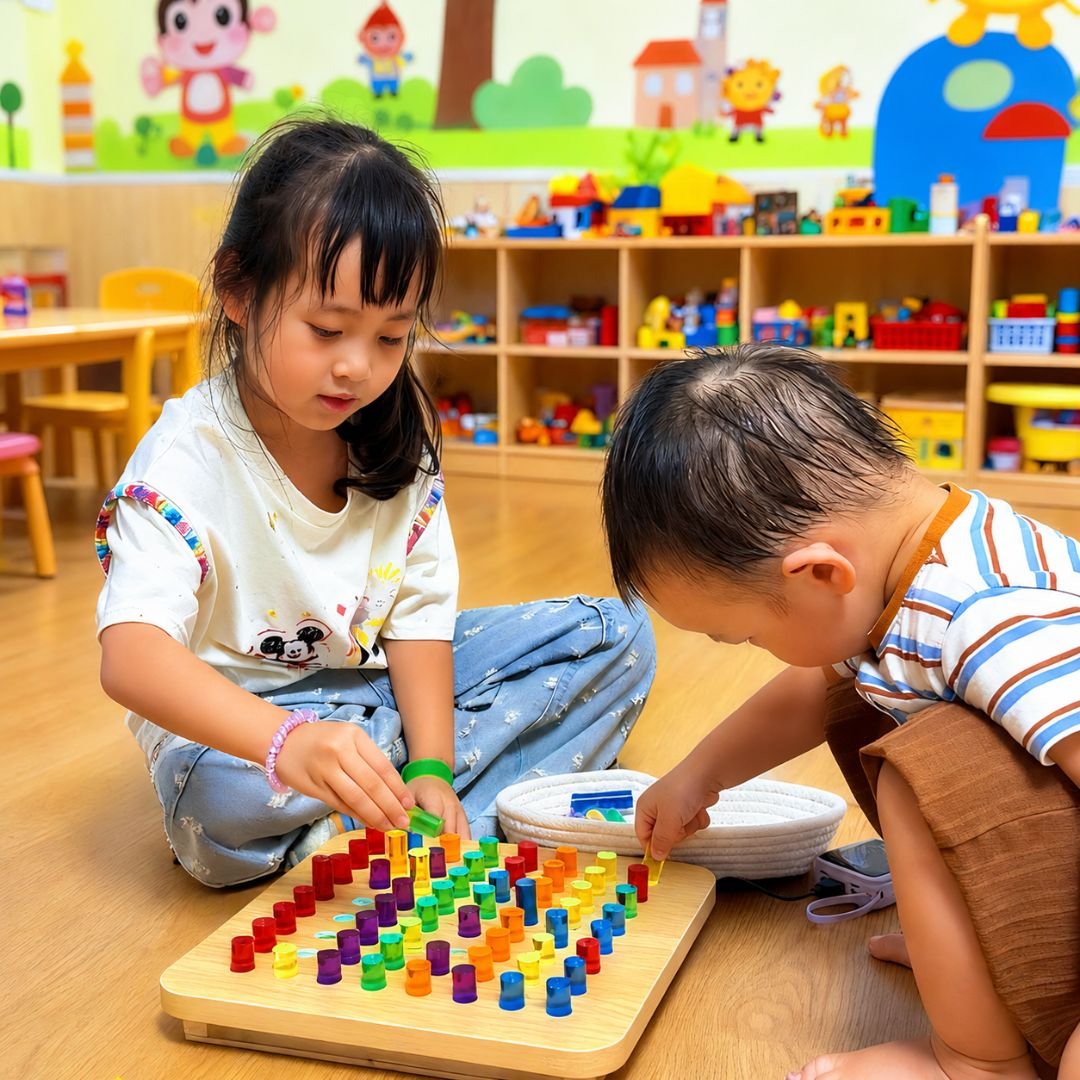
Glowing, color-changing toys are the heavy hitters for calming down. The light gives constant, gentle visual input, and the slow color changes are almost hypnotic. If your child asks for the tablet the second they’re bored, a light toy is the closest screen-free substitute you’ll find.
Our Light Up Peg Board is a 30 x 30 cm wooden board where kids press translucent pegs into a backlit grid to build glowing pictures. It has 16 colors on a remote and doubles as a night light after lights-out. For a bigger statement piece, the Light Up Sensory Wall Panel has 175 pegs on a 60 x 60 cm grid, hangs on the wall in about 10 minutes, and turns a corner of a bedroom into a proper calm-down space. Teens and adults use it too. Nobody outgrows glowing wall art.
2. Fine motor and Montessori toys
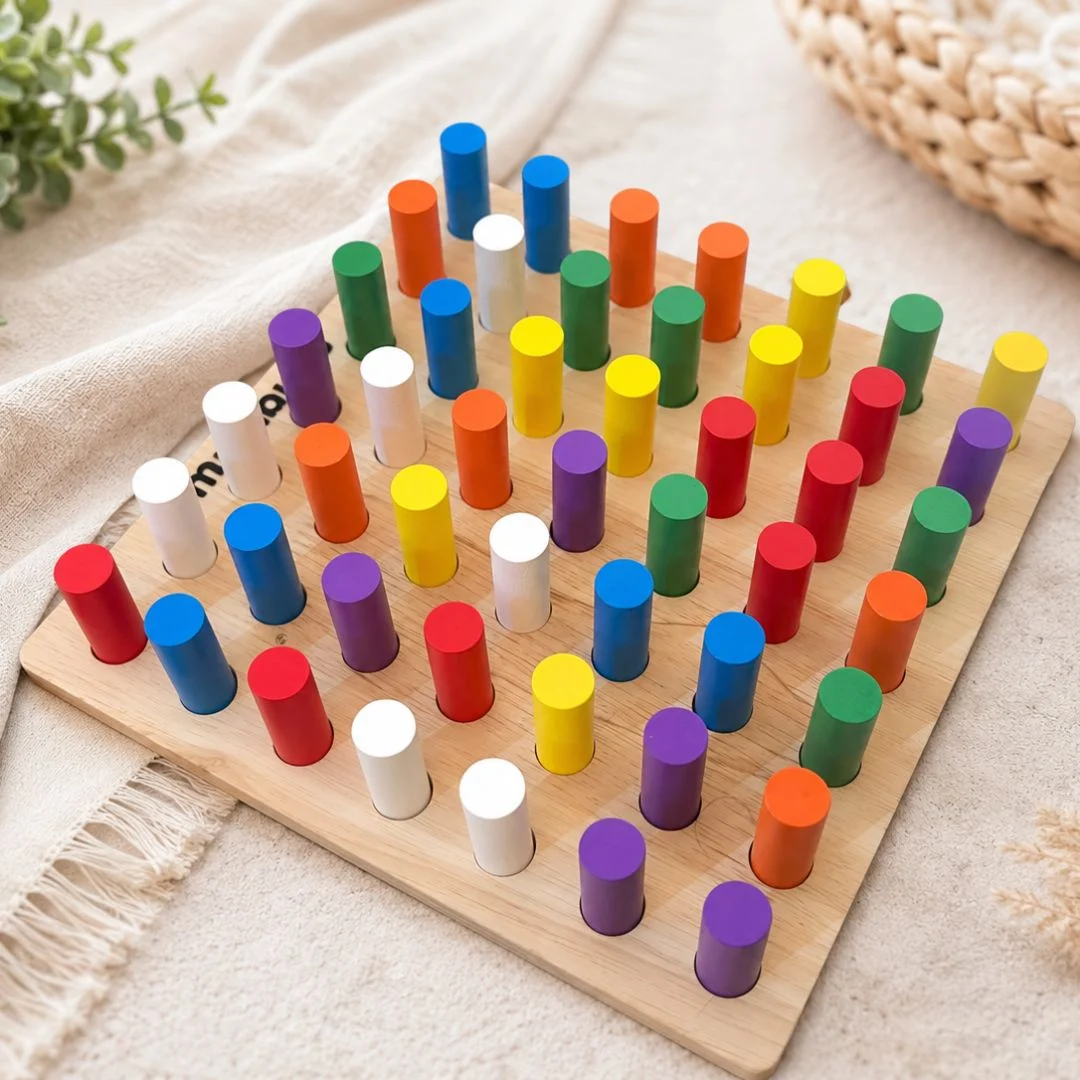
Sorting and placing toys train the small hand muscles that handwriting, buttons, and zippers depend on. They also teach colors and counting without a single worksheet. The Montessori Color Sorting Toy is a natural wood board with 49 rainbow pegs, non-toxic paint, a travel pouch, and 5 starter activity cards. It’s the toy we recommend first for toddlers around age 3 because it’s quiet, portable, and genuinely open-ended.
3. Tactile and fabric toys
Some kids are touchers. They rub blanket corners, stroke tags, pet the dog for an hour. For those kids, texture is the way in. Reversible flip sequin fabric changes color when you brush it one way and back again, so it’s tactile and visual at the same time. Our Reversible Sequin Fabric comes by the yard (about 52 inches wide) in three mermaid colorways. Parents sew it into calm-corner pillows, busy boards, and sensory blankets. Crafty grandmas love this one.
4. Mess-free creative toys
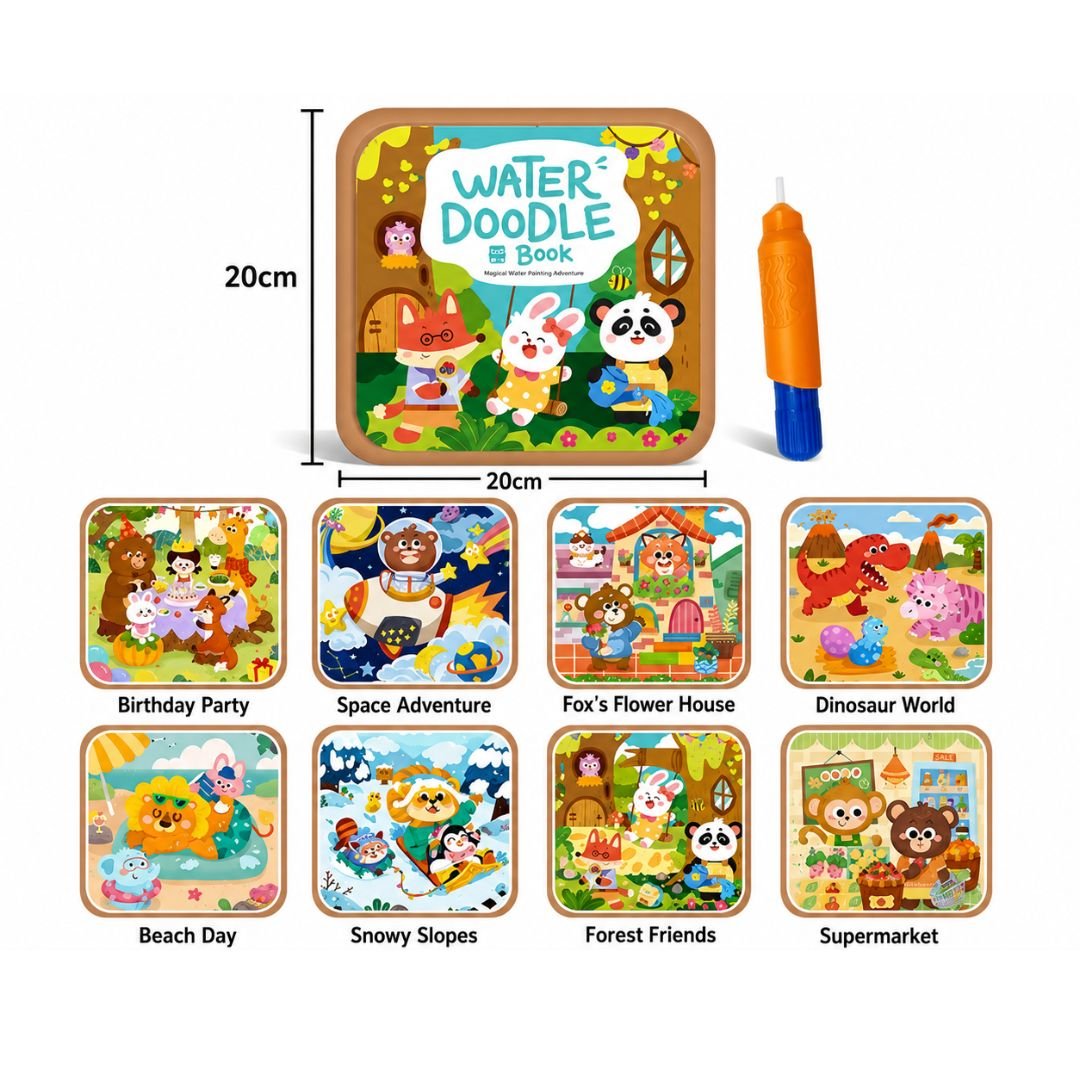
Art calms a lot of kids, but markers on the couch calm nobody. Water-reveal books solve it. The pen holds plain water, colors appear as kids paint, and when the page dries it resets for the next round. The Mess Free Water Coloring Book set has 2 books, 16 scenes, and 2 pens. It lives in our diaper bags. Restaurants, flights, waiting rooms. This is the $15.99 problem solver.
5. Chewable and oral motor toys
Kids who chew shirt collars and pencil ends are looking for oral input, and they’ll find it one way or another. Purpose-made chew toys in food-grade silicone give them a safe outlet. Match the toy’s toughness to your child’s chewing strength, and replace it once it shows wear.
6. Movement and balance toys
Swings, wobble cushions, balance boards, mini trampolines. These feed the vestibular system, the inner-ear sense that tracks movement. A lot of kids simply cannot sit and focus until they’ve had their movement quota for the day. Ten minutes of bouncing before homework can save an hour of arguing. Ask any OT.
Best sensory toys for autism and ADHD: how to actually choose
Here’s the question that matters more than any product list: is your child a sensory seeker or a sensory avoider?
Seekers crave input. They crash into couches, touch everything in the store, and turn the volume up. Seekers usually do well with rich, responsive toys: light-up boards, textured fabrics, movement toys.
Avoiders get overwhelmed. Loud toys, itchy fabrics, and busy patterns make things worse. For avoiders, pick slow and quiet: soft light on a low setting, smooth wooden pegs, predictable water books.
Autism affects roughly 1 in 36 children in the US according to the CDC’s autism data, and sensory differences are part of daily life for most of those families. But you don’t need a diagnosis to benefit from any of this. Calmer play is calmer play.
A quick cheat sheet from our own homes:
- For winding down before bed: the Light Up Peg Board on its dimmest setting.
- For a dedicated calm corner: the Sensory Wall Panel plus a beanbag underneath it.
- For quiet independent play: the Montessori Color Sorting Toy.
- For restaurants and car rides: the Mess Free Water Coloring Book.
- For the kid who touches everything: a yard of Reversible Sequin Fabric on a pillow.
Everything ships free in the US with 30-day returns, so trying one is low risk. Browse the full lineup in the MoniBabu shop.
4 rules for buying sensory toys (so you don’t waste money)
- Watch first, buy second. Spend two days noticing what your child seeks out or avoids. Lights? Textures? Movement? Buy into that channel first.
- Check the safety basics. Non-toxic finishes, no small parts for mouthers, sturdy construction. The American Academy of Pediatrics toy safety guide is a solid 5-minute read.
- Pick open-ended over single-trick. A toy with one function gets abandoned in a week. A peg board with infinite patterns doesn’t.
- Start small, then invest. Try a $16 water book or a $30 sorting board. If your child responds to visual input, step up to a light panel. That’s the order we’d spend our own money in, and it’s exactly why our range runs from $15.99 to $459.
How much should you spend on sensory toys?
Short answer: start small and let your child tell you where to invest. You do not need a $500 setup to see if sensory play helps. Here is the spending ladder we would follow again from scratch. Begin with a $15 to $30 item, a water coloring book or a color sorting board, and watch how your child responds over a week or two. If they keep coming back to it, you have learned something useful about what their nervous system wants. From there, step up to a mid-range light toy around $260, and only invest in a large wall panel once you know light and building genuinely calm your child. Buying in that order means every dollar is guided by real behavior instead of a guess. It also spreads the cost out, which is easier on the budget. The one thing we would not do is buy a giant bin of cheap plastic sensory toys all at once. Most get ignored within days, and the clutter itself can overwhelm a sensitive kid. A few well-chosen sensory toys almost always beat a pile of them.
Best Sensory Toys Comparison Table
Here are the MoniBabu sensory toys from this guide side by side, cheapest first, so you can start small and step up. Prices are current and everything ships free in the US with 30-day returns.
| Toy | Sensory channel | Best for | Price | Buy |
|---|---|---|---|---|
| Mess Free Water Coloring Book | Creative fine motor | Travel, restaurants, quiet time | $15.99 | Shop |
| Reversible Sequin Fabric | Tactile | Kids who touch everything | From $24.99 | Shop |
| Montessori Color Sorting Toy | Fine motor | Quiet independent play | $29.99 | Shop |
| Light Up Peg Board | Visual + fine motor | Winding down, doubles as a night light | $262.99 | Shop |
| Light Up Sensory Wall Panel | Visual + proprioceptive | A dedicated calm corner | $459.00 | Shop |
What are sensory toys: quick answers from parents
What are sensory toys and what do they do?
Sensory toys are toys designed to engage a child’s senses: sight, touch, sound, movement, or body awareness. They give kids predictable, repeatable feedback that helps them calm down, focus, and build skills like the pincer grasp. Therapists use them widely for autism and ADHD, but any child can benefit.
Are sensory toys only for children with autism?
No. They became popular through autism and occupational therapy, but the benefits are universal. Plenty of families buy a light-up peg board as a screen-time replacement and a night light, with no diagnosis involved.
Which sensory toys are best for calming down?
Slow and repeatable beats loud and flashy. Color-changing light boards on a dim setting, textured fabric, and water coloring books all work well. Skip anything with fast flashing or loud sounds for a child who’s already overwhelmed.
Do sensory toys really help with ADHD?
Many parents and therapists see real improvement in focus, especially during seated tasks, when kids have a sensory outlet. They’re a tool, not a treatment. They work best alongside routines, movement breaks, and whatever supports your pediatrician recommends.
What age are sensory toys for?
There’s a sensory toy for every age. Water books and sorting boards suit ages 3 and up. Light panels work from age 3 to adult. Fabric is for any age. Always check the age label for small parts if your child still mouths toys. If your child is younger than that, our age-by-age guide to sensory toys for 1 year olds covers what’s actually safe and worth buying at that stage.
MoniBabu is a family-run US store making therapist-inspired sensory toys for every child. Questions about which toy fits your kid? Ask us directly, we answer personally.
Moni
MoniBabu founder. I still keep this list taped inside a kitchen cabinet for whenever a new parent asks me where to start.